In metals the document is half the product
Two lengths of pipe can be dimensionally identical and commercially worth very different money, because one has a mill test certificate traceable to the heat it was rolled from and the other has a piece of paper. On anything that will be welded, pressurised or inspected, the certificate is the product.
What we buy
- Structural sections: beams, channels, angles and hollow sections to EN 10025 grades or the ASTM equivalents, in the profile series the design actually calls for.
- Sheet and plate, hot and cold rolled, by grade, thickness tolerance and surface condition.
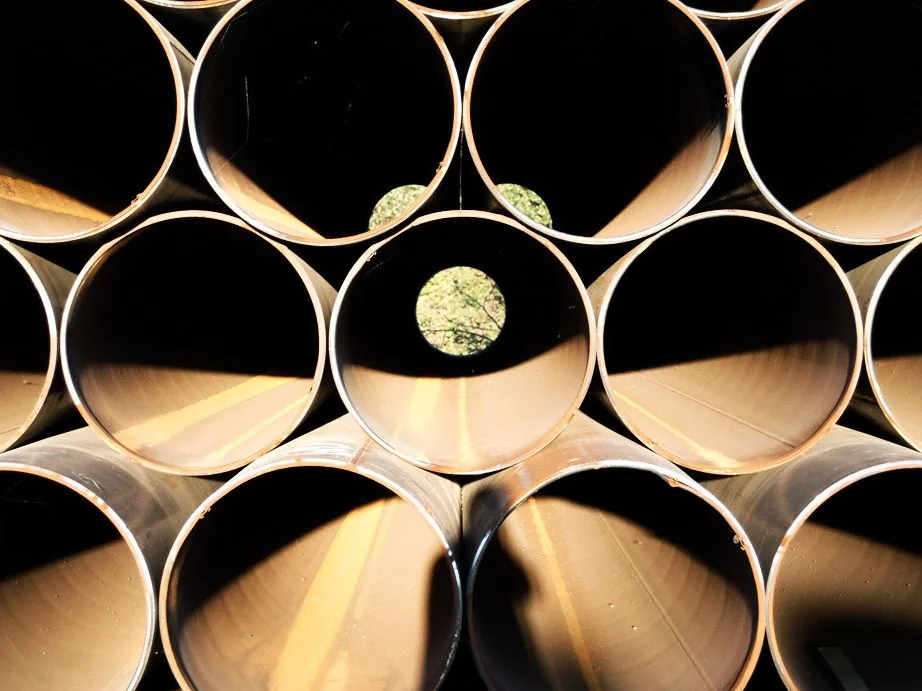
- Seamless and welded pipe, by outside diameter and wall thickness or by schedule, to the pressure standard the application requires.
- Fittings and flanges to ANSI or ASME B16.5, EN 1092-1 or the GOST series, matched to the pipe standard rather than assumed to fit.
- Fasteners and structural bolting by property class and coating.
The certificate, and why 3.1 is the line
EN 10204 defines the inspection documents. A type 2.2 test report is the producer's own statement of general conformity. A type 3.1 certificate is issued by the producer's own inspection function, independent of the manufacturing department, and states the actual test results for the material supplied, traceable to the heat number. A type 3.2 adds a third party.
On anything structural or pressure-bearing, 3.1 is normally the minimum that an engineer, an insurer or a customs authority will accept. Asking for “a certificate” and receiving a 2.2 is the commonest quiet downgrade in this trade, and it is invisible until the material is already on site.
We state the required document type in the order, we check the heat numbers on the certificate against the markings on the material at loading, and we photograph both.
Three standards families that do not map one to one
EN, ASTM and GOST are not translations of each other. Grades that are commonly treated as equivalent differ in chemistry, in impact testing temperature and in permitted tolerance. A material sold as “analogue of” a grade is not that grade, and if the destination's inspector works to one family, that is the family the certificate has to be issued under.
Where a project genuinely needs cross-standard supply, the right move is to name the standard in the purchase order and have the mill certify to it, which most mills of reasonable size can do if it is agreed before rolling rather than after.
Tolerance, length and what arrives bent
Thickness tolerance, straightness, ovality on pipe and end condition are all negotiable and all routinely unstated. Mill lengths differ by producer, and a specification that asks for exact lengths carries a cutting cost and a yield loss that has to be priced rather than discovered.
Pipe and sections are loaded in bundles and damaged on the ends. Bundles are strapped, end caps are specified where the application needs clean ends, and dunnage is written into the order because a container of steel that has shifted in transit is both a claim and a discharge problem.
Weight, not pieces
Metals are invoiced by weight and a container fills on weight long before it fills on volume. A 20ft container is usually the right box for dense cargo even when it looks half empty, and the theoretical weight against actual weighbridge weight is a line that has to be agreed in the contract, because the two are never identical.
What buyers ask about this category
The three that come up before a first order.
What is the difference between a 2.2 and a 3.1 certificate?
A 2.2 is the producer's general statement of conformity. A 3.1 states the actual test results for the material supplied, is issued by an inspection function independent of manufacturing, and is traceable to the heat number. On structural and pressure work, 3.1 is normally the minimum anyone will accept.
Can you supply GOST material against an EN design?
We can have a mill certify to the standard named in the purchase order, if it is agreed before rolling. What we will not do is supply an “analogue” grade and let the buyer discover at inspection that the chemistry and the impact testing are different.
Is a 20ft or a 40ft container better for steel?
Usually 20ft. Dense cargo reaches the weight limit long before it fills the volume, so a 40ft box ships mostly air and costs more per tonne.
Other categories
The same method, applied to different goods.
Send a specification. Get a landed price.
Product, quantity and destination port is enough to start. If you only have a problem, describe it and we will write the specification with you.