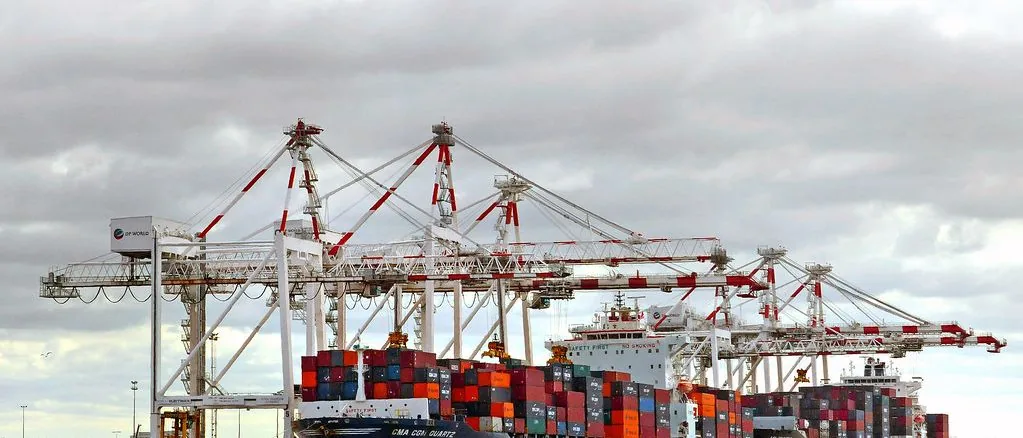
People outside this trade assume the hard part is finding a supplier. It is not. Anyone can find a supplier. The hard part is everything that happens after the price is agreed, and that is where twenty years turns into something you can actually sell.
What follows is not a list of achievements. It is an account of three kinds of supply work that look nothing alike from the outside, and of what we learned to carry from one to the next.
China: the gap between a price and a shipment
Sourcing from China is the most documented trade route on earth and still the one where newcomers lose the most money. The reason is simple. The quotation you receive and the goods you eventually open are connected by a chain of assumptions nobody wrote down.
The first lesson is about who you are talking to. A large share of the companies that answer an enquiry are trading companies presenting themselves as factories. That is not automatically bad, a good trading house adds real value, but the price, the lead time and the ability to fix a defect are completely different in the two cases. We learned to establish which one we were dealing with before discussing money, not after.
The second is that a specification written in your language is not a specification. It becomes one when it names the standard, the tolerance, the material grade, the pack and the marking, and when a sample has been approved against it in writing. A tonne of fasteners described as high tensile will arrive as something, and arguing about it after the container has sailed is a negotiation you have already lost.
The third is the calendar. Chinese New Year stops production for weeks and the queue afterwards is longer than the holiday itself. A delivery promise made in December for February is not a promise, it is an aspiration. Planning around that single fact prevents more missed deadlines than any amount of expediting.
- Establish factory or trading company before discussing price
- Approve a physical sample against a written specification
- Pre-shipment inspection where the value justifies it
- Plan the year around the New Year production stop
- Keep the final payment tied to documents, never to a promise
A specification becomes real at the moment a sample is approved against it in writing. Everything before that is correspondence.
The Russian north: delivery where there is no port
Most supply chains end at a quay. A crane takes the box off the ship, a truck takes it away, and the problem is solved. Northern delivery in Russia begins where that infrastructure stops existing.
Discharge onto an unequipped shoreline means exactly what it says. There is no berth, no gantry, often no road. Cargo comes off at anchorage onto self-propelled barges and pontoons, is pushed in by tug, and is landed on a beach or a riverbank using the vessel's own gear and whatever can be driven down to the waterline. Everything about the shipment is shaped by that ending.
The navigation window is the governing constraint. On the northern rivers and the Arctic coast it can be a matter of weeks, and it does not move because a supplier is late. Miss it and the cargo waits a year, or goes by winter road months later at a multiple of the cost. That inverts the usual priorities: a slightly higher price from a producer who will certainly make the loading date is cheaper than the best offer on the market from one who might not.
It also changes the goods themselves. Packing has to survive being handled several times by equipment that was not designed for it. Weights have to match what can actually be lifted at the far end, not what fits in a container. Fuel, food, building materials and spare parts for a settlement arrive in the same convoy, which means the shipment is assembled as one operation rather than as a set of orders.
- The loading date is set by the navigation window, not by the supplier
- Lift weights are limited by the equipment at the landing point
- Packing is specified for repeated rough handling, not for a warehouse
- Mixed cargo is planned as one operation, not as separate orders
- A spare part forgotten in June is a spare part missing until next summer
Where the navigation window is measured in weeks, certainty is worth more than price, and everyone on the quay knows it except the newcomer.
Europe: the regime is the product
Supplying into the European Union is the opposite problem. The logistics are easy. Roads are good, ports work, information moves. What is difficult is that the goods themselves must be legally admissible, and the evidence for that has to exist before anything moves.
Conformity is not paperwork added at the end. Marking, declarations of conformity, material and test certificates, labelling in the right languages, pallet treatment, packaging and waste obligations: each of these is a property of the product, decided at the factory, not at the border. A shipment that is perfect commercially and wrong on one label is still a shipment that does not clear.
Food adds a second layer on top of the first. Approved establishment numbers, veterinary and health certification, temperature records that must be continuous and produceable, and a cold chain that has no gap between the plant and the cold store. A reefer container is not a cold store with wheels, it is a machine that has to be plugged in, monitored and accounted for at every handover.
- Conformity is designed into the product, not attached at the border
- Labelling and language requirements are checked before production, not after
- Food moves on establishment approval and certification, not on price
- Temperature records are part of the goods
Food, equipment and materials are not three businesses
We have supplied frozen and chilled food, industrial equipment, building and finishing materials, tools, metals, packaging and consumables. From outside they look like different trades. From inside the differences sit in a short list of variables, and everything else repeats.
Food is governed by certification and by time. Equipment is governed by specification, spares and commissioning. Materials are governed by standards, tolerances and mill certificates. Change those variables and the rest of the process, specification, producer verification, landed costing, staged payment, documents, inspection, is the same work in the same order.
That is why we do not present a catalogue. A catalogue implies that the product is the asset. It is not. The asset is a route that is known to work: the producers on it, the forwarder, the broker, the document set and the payment structure. Once that exists, the cargo travelling down it can change without the schedule changing with it.
The asset is not the product. It is the route, and the proof that it has carried something before.
What twenty years actually buys
Not a contact list. Contacts expire, factories are sold, approvals lapse, a plant that could ship to a country last year cannot this year. What lasts is a sense of where a deal is going to break, early enough to do something about it.
It is knowing that the quotation is below the market and asking why before signing. It is reading a certificate and noticing the establishment number is for a different site. It is pricing the risk of a missed sailing instead of the saving on the freight rate. It is writing the claim window into both contracts so that the gap between them is never yours to fall into.
None of that is visible in a price list. It shows up only in the shipments that arrived when they were supposed to, and in the ones we declined to start.
Working with us
Send a specification and a destination. If you only have a problem rather than a specification, describe the problem and we will write the specification with you.