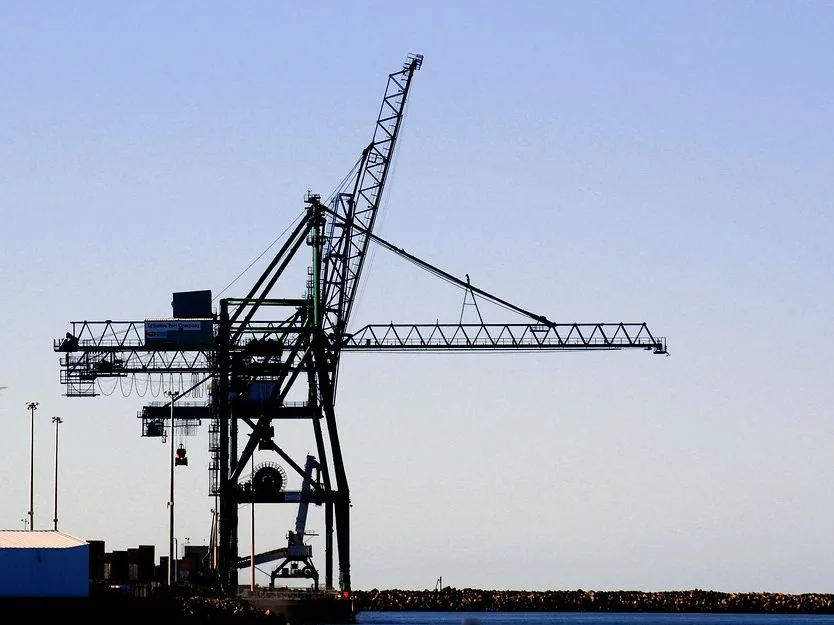
The sea leg is the easy half
For a landlocked buyer in Southern Africa the ocean freight is a solved problem. What decides the delivered cost and the delivered date is the road leg out of Durban, the paperwork that travels with the truck and whether anyone checked which trade regime the consignment is actually moving under.
SACU is not SADC, and the difference changes the paperwork
This is the most common and most expensive confusion on the lane. Botswana, Namibia, Eswatini and Lesotho form a customs union with South Africa, with a common external tariff applied at the first point of entry into the union. Goods moving between members of that union are not in the same position as goods moving under the wider Southern African Development Community preference, where a certificate of origin and a rule of origin have to be satisfied.
The practical consequence is that the document a consignment needs depends on where the goods originate and which borders they cross, not on where the truck is going. A SADC certificate of origin obtained for a movement that never leaves the customs union is wasted effort; the same certificate missing on a movement that does leave it is a duty bill. Requirements change, so we confirm the position per consignment with the revenue authority or a licensed clearing agent rather than relying on how the last one went.
The transit declaration travels with the load
On the regional corridors the customs administrations work from a common transit declaration completed at the office of departure, with continuation and transit control sheets, and copies move with the consignment to each border post until the destination. The document set is prepared once and then has to survive the journey.
That is a different discipline from ocean freight. There is no second chance to correct a declaration at a land border at two in the morning, and a truck held at a post is costing demurrage on the trailer and shelf space at the buyer. We route this lane through a clearing agent who is physically present at the border posts the load will cross, not one who is excellent in Johannesburg.
Paper reels are a handling specification, not a product
Newsprint, kraft and containerboard in reels are bought by weight and lost by edge damage. A reel with a crushed edge is downgraded or scrapped, and most of that damage happens in handling rather than in transit. Reel diameter and core size have to match the buyer’s machine, reel weight has to match the lifting equipment at the receiving end, and the handling method has to be specified: clamp trucks need a reel that can take clamp pressure, and a facility without them needs reels on pallets.
The same thinking applies to the rest of the basket. Corrugated packaging arrives flat and is ruined by moisture; cleaning and facility consumables are bought on a schedule and fail on stockout, not on price; workwear and protective equipment is bought on a standard mark and is worthless without it.
Why we quote this lane DAP
On a corridor where the inland leg carries most of the risk, a port price tells the buyer very little. DAP puts the ocean freight, the port charges, the transit documentation and the road leg into one number at the buyer’s own gate, and it puts the risk of the road leg on the party that selected the transporter, which is us.
Buyers who want to run their own inland leg can have the price at Durban instead. We quote both, with the difference shown, because the gap between them is the honest cost of the part of the journey that most quotations quietly leave out.
What buyers ask about this lane
The four questions that decide whether a shipment on this corridor works, answered the way we answer them on a first call.
Is a SADC certificate of origin needed for a delivery from Durban to Gaborone?
Not necessarily. Botswana, Namibia, Eswatini and Lesotho form a customs union with South Africa with a common external tariff, and that is a different regime from the wider SADC preference, where a certificate and a rule of origin have to be satisfied. The document a consignment needs depends on the origin of the goods and the borders crossed, so we confirm the position per consignment with the revenue authority or a licensed clearing agent.
What paperwork travels with the truck?
A common transit declaration completed at the office of departure, with continuation and transit control sheets, copied to each border post until the destination. There is no second chance to correct it at a land border at night, so it is prepared once and correctly.
How should paper reels be specified?
By diameter, core size and reel weight matched to the buyer's machine and to the lifting equipment at the receiving end, plus the handling method. Clamp trucks need a reel that can take clamp pressure; a site without them needs reels on pallets. Most reel damage happens in handling, not in transit.
Why quote DAP instead of a port price?
Because on this lane the inland leg carries most of the risk, and a price at Durban tells the buyer very little. DAP puts freight, port charges, transit documentation and the road leg into one number at the buyer's gate and leaves the road risk with the party that chose the transporter. We show the Durban price alongside it so the difference is visible.
A lane is the asset, the product travelling down it can change
Once the producers, the forwarder, the customs broker and the document set work on a route, the same route carries a different product next time. These are the routes we already run.
Send a specification. Get a landed price.
Product, quantity and destination port is enough to start. If you only have a problem, describe it and we will write the specification with you.