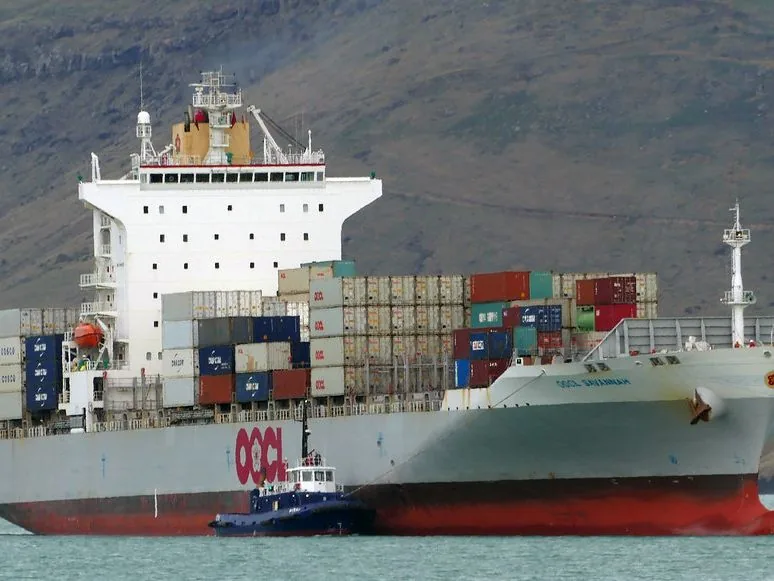
The cheapest offer in this trade is usually the one that cannot ship
Frozen poultry and bulk staples into West Africa look like a pure price business and they are not. An offer is only real if the producing establishment is admissible in the destination country, if the cut is the one the market actually buys and if the payment terms survive a forty day voyage. Most of the cheap offers fail one of the three.
Admissibility comes before price
Frozen meat does not enter on a commercial invoice. It enters on a veterinary health certificate issued for a specific producing establishment, in a form the destination country accepts. An establishment approved for one West African country is not automatically approved for its neighbour, and the requirements change.
For United States origin, export certification runs through the Food Safety and Inspection Service, and the certificate requirements for a given destination are published in its export library. Some destinations are handled electronically and some still require a paper certificate, which changes the lead time at the loading end. For European Union origin the equivalent is the competent authority of the member state. The question to put to any seller, before discussing a price, is the establishment number and written confirmation that it is cleared for the destination.
We do not treat a seller’s assurance on this as an answer. The establishment number is checked, and where the destination is ambiguous we get the certificate form identified in writing before any money moves.
A cut is three products, not one
The commonest reason two offers cannot be compared is that they are not for the same thing. A whole wing with three joints, a two joint wing, a drumette and a mid joint flat are four different products with four different prices and four different buyers. Turkey is sold as tom or hen, and the lines are not interchangeable for a processor. Tails, backs and paws each have their own market and their own seasonality.
Every enquiry we send names the anatomy explicitly, names the pack, and asks for the price on the same Incoterm for each line separately. An offer that quotes “wings” is not an offer.
Pack and cold chain are part of the specification
The West African standard is block frozen product in 10 kg cartons, which is not the standard pack in the United States or in the European Union. Repacking is possible and it costs money, so the price has to be asked for in both the producer’s own pack and in the destination pack. The difference tells you what the non-standard format is really worth.
A 40ft reefer carries about 25 tonnes net. The temperature is set at loading, recorded throughout and read at discharge, and the recorder tape is part of the document set, not an optional extra. Plug time at the transhipment port and at the destination is the part of the chain nobody books and everybody assumes.
Compare the market, not the quotations
A quotation is what a seller would like to receive. Customs statistics are what the goods actually crossed a border at, because the declared value is divided by the declared net weight and every discount the seller really gave is already inside that number. Before we negotiate a lane we pull the destination country’s import values by origin and by commodity code for the most recent full periods, and we negotiate against that rather than against the first offer.
On this corridor that exercise regularly moves the target by twenty per cent or more, and it changes which origin we approach first. It is also the only way to tell a genuinely competitive offer from one that is simply the lowest of three bad ones.
The payment terms decide the return, not the margin
This is the part buyers and sellers both underestimate. The margin per kilogram is set in the negotiation; the return on the money is set by how long the money is out. A letter of credit payable at sight against shipping documents releases the cash while the vessel is still at sea. Thirty day terms after arrival add the full voyage plus a month to the cycle, and on a multi container programme that is the difference between financing one shipment and financing four at once.
We price the two cases separately and we say so. A buyer who wants extended terms is asking for a credit facility, and a credit facility has a price. That conversation belongs before the first shipment, not after it.
What buyers ask about this lane
The four questions that decide whether a shipment on this corridor works, answered the way we answer them on a first call.
What has to be checked before a frozen meat offer is real?
The producing establishment has to be admissible in the destination country. Frozen meat enters on a veterinary health certificate issued for a specific establishment, in a form the destination accepts, and approval for one West African country does not carry to its neighbour. We ask for the establishment number and written confirmation before discussing price.
Why can two poultry offers not be compared?
Because they are usually not the same product. A whole wing with three joints, a two joint wing, a drumette and a mid joint flat are four products with four prices. Turkey is sold as tom or hen and the lines are not interchangeable. Every enquiry has to name the anatomy, the pack and the Incoterm for each line separately.
What is the standard pack and container for this lane?
Block frozen product in 10 kg cartons, in a 40ft reefer carrying about 25 tonnes net. That is not the standard pack in the United States or the European Union, so we ask for the price in the producer's own pack as well; the difference is what the non-standard format really costs.
How do the buyer's payment terms change the economics?
A letter of credit payable at sight against shipping documents releases the cash while the vessel is still at sea. Thirty day terms after arrival add the voyage plus a month to the cycle, which on a multi container programme is the difference between financing one shipment and financing four at once. Extended terms are a credit facility and are priced as one.
A lane is the asset, the product travelling down it can change
Once the producers, the forwarder, the customs broker and the document set work on a route, the same route carries a different product next time. These are the routes we already run.
Send a specification. Get a landed price.
Product, quantity and destination port is enough to start. If you only have a problem, describe it and we will write the specification with you.